Tech newsletter digest: May 27, 2026
A cross-newsletter thematic digest from Stratechery, Lenny's Newsletter, Ben's Bites, and The Batch — grouped by topic: AI agent platform wars, orbital data centers, Nvidia's stack pivot, SaaS pricing collapse, coding agent workflows, benchmark gaps, and product career signals.

Covering: Stratechery · Lenny's Newsletter · Ben's Bites · The Batch by deeplearning.ai
This week's issues converged on three tensions that are reshaping how AI gets built, sold, and used: the fight over who controls the agent platform layer, the fracturing economics of AI infrastructure, and the persistent mismatch between what AI promises and what it actually delivers on the job.
AI agents: the platform battle is becoming architectural
The most-discussed story across Ben's Bites and The Batch this week was not a new model release — it was a question of distribution. Who owns the context window where agents do their work?
Ben Tossell's read after Google I/O 2026 is that Anthropic's OpenClaw has a structural edge: its cross-platform design means it can operate across calendars, email, code editors, and third-party tools without being gated by any single vendor's walled garden. Google, by contrast, is building its agent strategy inside Workspace — tightly integrated, but locked in. 1 Ben frames this as a "mandate of heaven" moment for Anthropic: the architectural choice that seemed risky (open platform vs. integrated suite) is turning into a distribution advantage.
The Batch reported a concrete challenge to that position: Hermes Agent, a new OpenClaw competitor, is outperforming OpenClaw on several agentic task benchmarks by using a more aggressive task-parallelization architecture. 2 The benchmark advantage is real but narrow; what matters more is whether Hermes can handle long-horizon, multi-step tasks without user intervention — which The Batch identifies as the actual differentiator in the personal agent category.
Meanwhile, Ben has largely stopped using OpenClaw as his daily driver — not because it broke, but because his preferred interaction mode has shifted to voice. 3 The gap between state-of-the-art text agents and actually usable voice agents is wider than most product teams seem to realize.
On the SaaS side, the MCP (Model Context Protocol) angle is worth watching. Ben's Bites argues that SaaS products that expose themselves as MCP-accessible data and action layers — rather than fighting agents as competitors — have a plausible survival path. 4 The companies integrating MCP early are effectively turning their user interface into agent infrastructure.
What this means for you: If you're building a product that could be invoked by an agent, the time to expose an MCP interface is now, not when agents become mainstream. If you're evaluating agent platforms for enterprise use, the benchmark numbers matter less than the answer to: "Can this agent operate across every system my team actually uses?"
Loading content card…
AI infrastructure: orbital ambitions, Nvidia's pivot, and local opposition
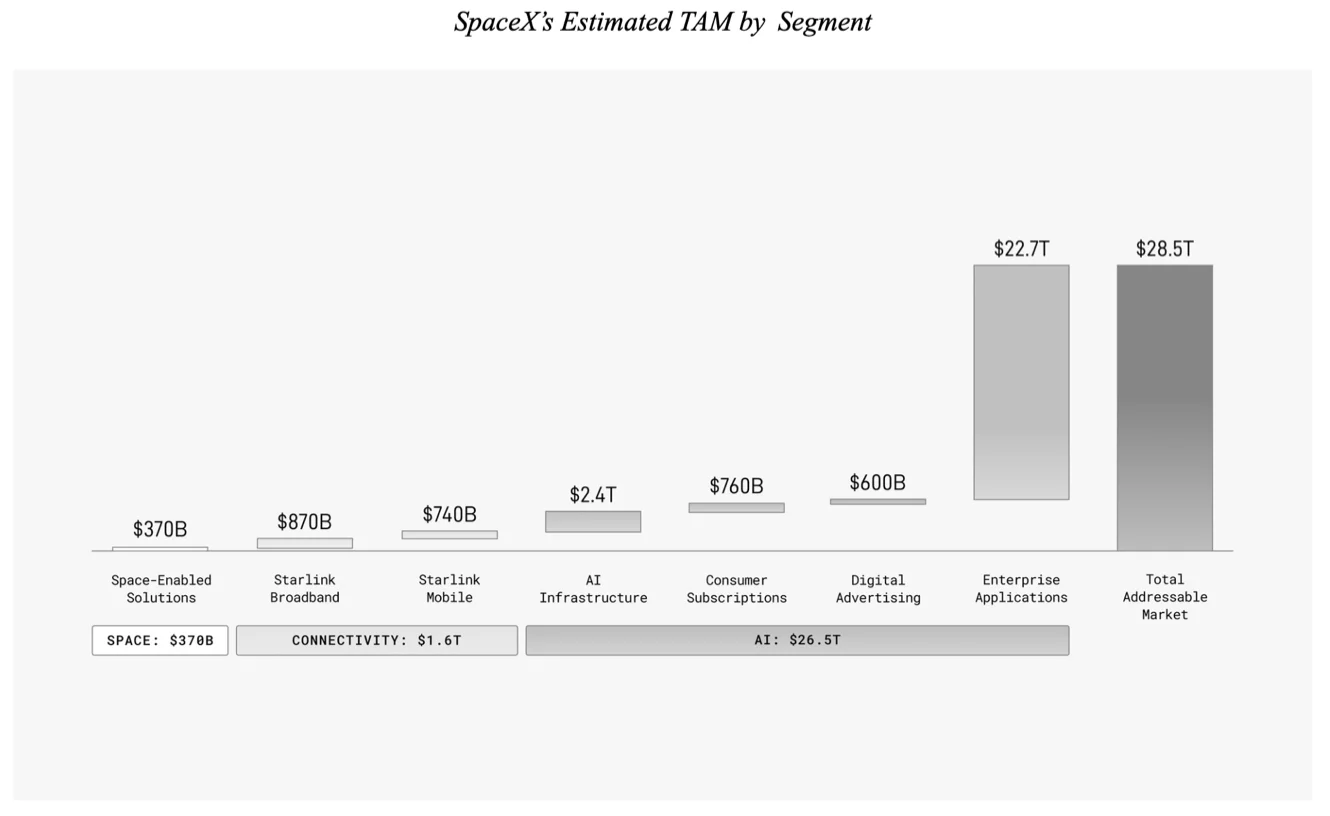
Ben Thompson's most ambitious piece this week was the SpaceX IPO analysis, which doubles as a serious argument for space-based AI inference. The financial case for a $2 trillion valuation is weak — SpaceX reported $18.67 billion in revenue against $4.9 billion in losses — but Thompson argues that SpaceX's claim to a $26.5 trillion AI total addressable market isn't purely absurd at a physical level. 5 Individual Starlink satellites are already roughly 7.4m × 2.7m — GPU rack territory — interconnected by laser links, powered by solar arrays, cooled by deployable radiators. Whether the economics work at scale is a separate question, but the infrastructure physics are not fantasy.
On the ground, the week also brought Nvidia's Q1 earnings, along with a notable reporting structure change. Nvidia is now separating hyperscaler sales — where commoditization pressure from Google TPUs, Amazon Trainium, and Microsoft Maia is real — from enterprise, sovereign AI, and automotive, where Nvidia controls the full stack and faces less custom-silicon competition. 6 The reporting change is a tell: Nvidia knows the hyperscaler segment is the part of its business most at risk from vertical integration, and it wants investors to see the moat it still holds everywhere else.
Thompson also returned to an underappreciated bottleneck in AI infrastructure build-out: community opposition to data centers. 7 Water use, noise, and land impact are real grievances, and his conclusion is blunt — direct financial compensation to affected communities is the only politically viable path, not technical mitigation alone. Permitting and local opposition may slow capacity expansion more than chip availability in the next few years.
What this means for you: For investors, Nvidia's reporting restructuring is a useful framework: the hyperscaler segment is the commodity question, the rest is the moat question. For anyone modeling AI infrastructure costs over a 10+ year horizon, the data center opposition problem is not a footnote.
AI economics: the SaaS pricing trap and the Jevons problem
Two Lenny's Newsletter pieces this week deserve to be read together because they point in opposite directions — and both are right.
The first: classic SaaS freemium is broken for AI products. When every user query has a real marginal cost, a generous free tier becomes a subsidy program that compounds as usage grows. 8 The right pricing model is either usage-based (charge for value delivered) or a deliberately thin free tier with a clearly priced paid path. The framework from Vikas Kansal: segment users by value extracted versus cost to serve, then price the high-value/low-cost segment aggressively and cut the high-cost/low-value segment from free entirely.
The second: the Jevons paradox in knowledge work. Dan Shipper (Every — a newsletter and software company) argues that AI automation doesn't reduce total human labor demand — it expands what's possible, which raises the ambition ceiling, which creates more work. 9 Teams using AI don't shrink to 60% of their former size; they take on projects they previously couldn't justify. This has a direct implication for headcount models: if you're building an AI product positioned as a labor reducer, your actual customers are using it as a labor expander — and your pricing and feature roadmap should reflect that.
Stratechery's "Deployment Company" piece adds another layer: OpenAI is forming a new enterprise deployment unit, which signals that raw model capability is no longer the differentiator. 10 Distribution and integration are. Thompson's framing — that AI is recapitulating 1970s mainframe-to-services economics, with top-down deployment by large vendors rather than self-service SaaS — pairs directly with the freemium death observation.
At the consumer end, OpenAI doubled free-tier usage limits for ChatGPT this month, 11 likely a response to Anthropic and Google pushing their own free offerings. The free-tier war is now being fought on usage limits as much as model quality — a dynamic that has historically ended in margin destruction for everyone involved.
What this means for you: If you're pricing an AI product, treat marginal query cost as the first constraint, not an afterthought. If you're modeling the impact of AI on your team's output, the Jevons lens predicts you'll need to plan for more ambitious goals, not fewer people.
Developer tools: coding agents and the spec-first shift
Ben's Bites covered OpenAI's Codex (the agentic coding tool, distinct from the original code completion model) gaining enterprise traction. 12 The friction point is transparency: developers are hesitant to merge AI-generated pull requests they can't quickly audit. Codex, Cursor's background agents, GitHub Copilot Workspace, and Devin are all competing for the same engineering teams, and the winner will likely be whichever tool builds the most useful "explain what you just did" layer.
Lenny's interviewed a senior engineer at Anthropic about their actual daily workflow with Claude. 13 The key finding doesn't involve prompting tricks: the engineer writes a detailed spec first — often with AI assistance — and then uses that spec to drive AI-assisted coding. Writing the spec forces clarity about what you actually want to build; the AI coding step becomes faster and produces fewer hallucinations when it has a concrete spec to work against. This is a workflow shift, not just a tooling swap.
Ben Tossell's "all apps become dev tools" piece (May 14) makes a related point from the product side: as AI agents increasingly consume apps as programmatic interfaces, the line between user-facing product and developer tool is collapsing. 14 Building agent consumption as a first-class use case from day one is no longer optional for software products expecting to be relevant in two years.
What this means for you: If you're managing an engineering team adopting AI coding tools, the spec-first workflow is low-risk to try and addresses the biggest practical obstacle (AI output quality degrades without clear requirements). If you're building software, the agent API surface deserves the same design attention as the user interface.
Loading content card…
AI safety and benchmarks: the gap between eval scores and real work
The Batch's May 22 issue put three safety-adjacent stories together that read as a coherent warning.
First: current AI agent benchmarks overstate readiness for real-world deployment. 2 The benchmarks used to evaluate agents measure narrow task completion — coding, math, reasoning — rather than the full range of economically valuable labor. The Batch calls for a benchmark framework aligned with actual job task taxonomies (similar to O*NET occupational data). Until that framework exists, enterprise buyers are flying partially blind: a vendor's impressive benchmark score may not translate to any measurable ROI in their specific deployment context.
Second: AI-enabled cybersecurity threats crossed a threshold. A Google report documented an LLM-generated script that successfully bypassed two-factor authentication. 2 The deeper problem is that LLM-generated malware produces novel, non-signature-matching code variations at scale, which renders traditional antivirus approaches structurally insufficient. Security teams need behavioral detection, not pattern matching.
Thinking Machines Lab (TMI) released its first "interaction model" — a multimodal AI that monitors conversation state continuously and can inject corrections proactively, rather than waiting for a full turn. 2 This is a new model class distinct from standard chatbots, with potential use cases in real-time meeting assistants and customer support agents that catch misunderstandings before they compound.
Andrew Ng's editor's letter in the same issue argued against Harvard's move to cap A grades at 20% of students — his position is that grade scarcity creates zero-sum competition and AI tutoring tools can make personalized, high-quality instruction accessible at scale. 2 The argument is about education policy, but it also applies to enterprise training: skill scarcity created by artificial difficulty floors is a solved problem if you deploy AI tutoring.
What this means for you: When evaluating AI agents for enterprise deployment, ask vendors to map their benchmark scores to O*NET-style job tasks relevant to your context — not just to coding/math proxies. On the security side, if your threat model still relies primarily on signature-based detection, it needs an update.
Loading content card…
Product and career signals
Lenny Rachitsky published his curated list of 36 foundational books for product builders (May 27), organized by three categories: product craft, leadership, and personal growth. 15 The list spans established titles (Inspired, Good Strategy Bad Strategy) alongside newer entries that reflect AI-era product thinking. For anyone building a reading list or onboarding junior PMs, the thematic grouping is the useful part — it maps to the progression from craft to judgment to sustained output.
On the job market, Lenny's March 2026 survey of the product hiring landscape documented a bifurcation in PM roles that appears to be accelerating: "AI PM" tracks (requiring deep model knowledge) and "deployment PM" tracks (driving AI adoption inside enterprises) are diverging into distinct career paths. 16 Supply of qualified AI PMs remains far below demand, with candidates who can bridge product sense and LLM/agent fundamentals commanding meaningful salary premiums. That gap is unlikely to close quickly — the skills take time to develop and the role definitions are still stabilizing.
What this means for you: If you're a PM considering a specialization, the AI PM vs. deployment PM distinction is worth examining now, before the role definitions solidify around you. If you're hiring, the two tracks require different evaluation criteria and probably different compensation bands.
Sources: Stratechery (stratechery.com) · Lenny's Newsletter (lennysnewsletter.com) · Ben's Bites (bensbites.com) · The Batch by deeplearning.ai (deeplearning.ai/the-batch)*)
Cover image: illustration from Stratechery's SpaceX IPO analysis, May 27, 2026 5
References
- 1Google's take on OpenClaw — Ben's Bites
- 2The Batch — May 22, 2026
- 3Can I get my agents on the phone? — Ben's Bites
- 4Is SaaS dead? (MCP comeback in works) — Ben's Bites
- 5The SpaceX IPO and Data Centers in Space — Stratechery
- 6Nvidia Earnings, The AI Stack — Stratechery
- 7Data Center Discontent — Stratechery
- 8Why SaaS freemium playbooks don't work in AI — Lenny's Newsletter
- 9The AI paradox — Dan Shipper — Lenny's Newsletter
- 10The Deployment Company — Stratechery
- 11Elon doubled limits — Ben's Bites
- 12Codex is gaining steam — Ben's Bites
- 13How I AI — Lenny's Newsletter
- 14Agents feedback tip — all apps will become dev tools — Ben's Bites
- 15Essential books for product builders — part 1 — Lenny's Newsletter
- 16State of the product job market in early 2026 — Lenny's Newsletter
Add more perspectives or context around this Drop.